
Route 06 / game-driving guide

SUV Driving Controls and Handling Guide

This independent Euro Cargo Journey guide helps Canadian English-language readers build confidence with the driving and handling experience in SUV Car Driving: Drift Game. It focuses on observation, calm inputs, and repeatable practice inside the game, so you can judge whether its driving focus suits you. Every suggestion here is for game play only, never real-world SUV operation.

Current-information reference

For the current game listing, use the official Google Play page as an external reference after reading this guide. Euro Cargo Journey is independent and is not affiliated with Google, Google Play, or the game’s developers or publishers.

View on Google Play (opens in a new tab)
Dark SUV travelling on a broad curving paved road in a northern landscape
Editorial road context only; not official game artwork.

Start with a calm input routine

Read the screen before moving

At the beginning of a session, pause long enough to notice what the game presents. If visible, look for cues that appear to affect direction, movement, stopping, or viewpoint, then take in the space around the vehicle. This is not about assuming every device or version uses the same arrangement; it is about learning the interface in front of you before asking it to do too much at once.

Use short, deliberate tests

Test one input at a time in a clear in-game area. Begin with gentle direction changes, movement, and stopping attempts, then observe the response before combining them. Repeat a simple action a few times instead of treating the first result as final. That small comparison gives you a clearer sense of what changed without relying on unsupported assumptions about technical settings or vehicle behaviour.

Build consistency before pace

A predictable rhythm is more useful than chasing a fast run while the handling response is still unfamiliar. Aim for smooth transitions between actions and return to an uncomplicated stretch of available game space when you want to compare attempts. Once you can read the result of a basic move, you have a steadier base for exploration. For wider editorial context, continue with the Gameplay Guide.

Make the first turn readable

Steering habit

Begin with smaller directional changes

Start a turn with a controlled, modest directional change and watch the on-screen response before increasing the correction. Abrupt changes can make it difficult to tell which part of the attempt shaped the result. When a repeatable corner or open route is available, use it as a reference point for comparison. Treat the outcome as feedback from this game session, not proof of a particular simulation model.

Visual line

Look beyond the front of the vehicle

Use the visible road or open space ahead as a screen-reading reference. Looking farther forward can help a player begin a correction earlier, rather than reacting after the vehicle has already crossed the line they wanted to follow. The habit stays useful without assuming a map scale, traffic system, obstacle type, or named environment: work with the scene currently visible in the game.

Leave room for response

Add pace in stages

Build movement gradually in a new area or after a reset, giving yourself time to see how the vehicle reacts on screen. Gradual input is useful because it gathers feedback: quick pace changes can leave less time for a visual correction. The point is not to chase a measured speed, but to keep each attempt understandable.

Plan the next action early

Consider the next turn, stop, or line change before reaching it, using the visible game space as your cue. This can reduce rushed reactions whether you are exploring or repeating a route. It does not rely on claims about timers, traffic rules, collisions, or mission structure; it simply gives your next input a clearer purpose.

Reset the pace after a messy attempt

After an awkward turn or slide, slow the practice run down and identify one adjustment to test next. That might be timing, direction, pace, or the visual reference you chose. A reset is not a performance verdict or a guaranteed fix; it is a practical way to connect the next attempt to the recovery and drift ideas later in this guide.

Use the camera as part of handling

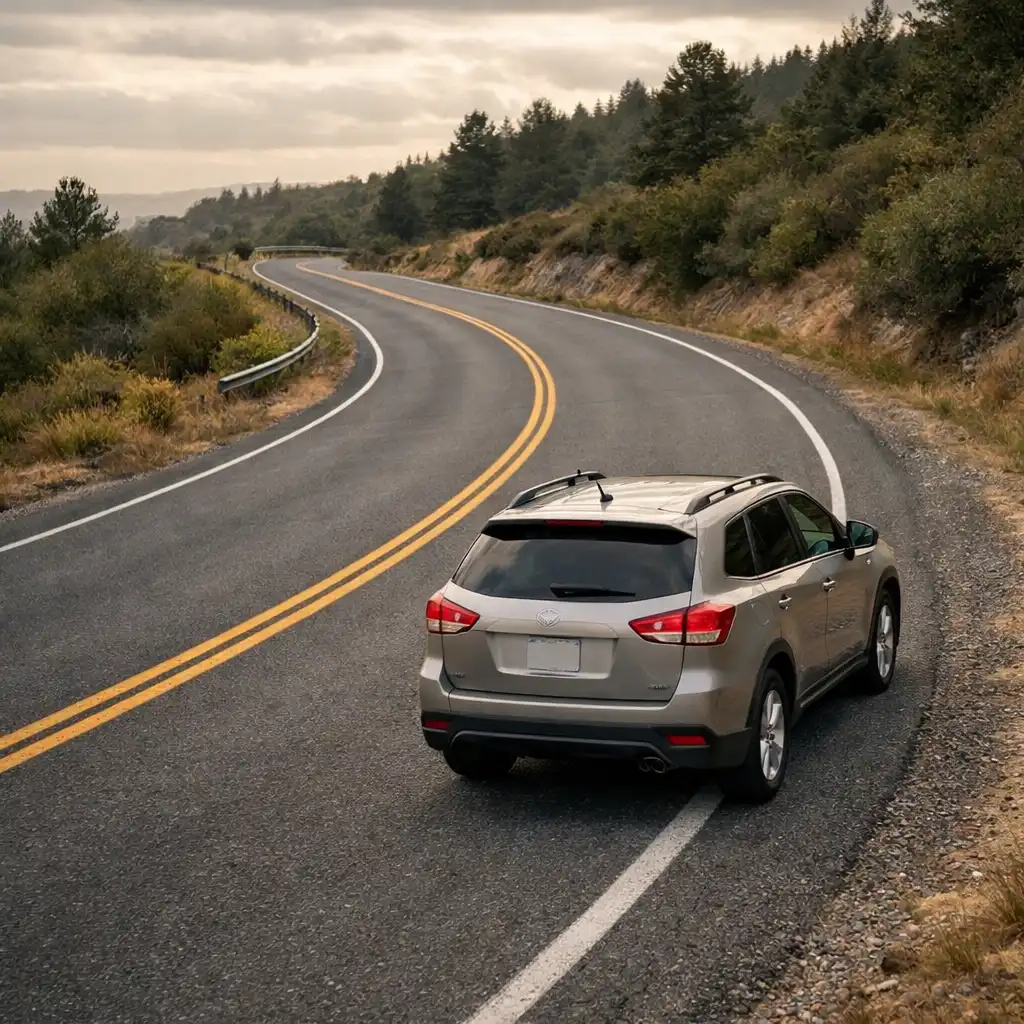
SUV approaching a visible bend with the road edge and vehicle position clearly shown
Editorial image: use the available view as a way to read position and space.

Viewpoint awareness

Choose the clearest available view

Favour whichever available in-game view gives you the clearest sense of vehicle position and upcoming space for the task you are practising. Visible options may vary, and a broad exploration run may call for a different screen reference than a precise turn. Use what the game makes available rather than assuming a named camera mode or setting is always present.

Reference points

Use fixed visual references

Choose features that are visible in your current scene—perhaps a road edge, corner shape, or open-space boundary—as repeatable references during practice. Those examples are conditional, not guaranteed environment features. What matters is selecting a stable visual cue and using it to judge an earlier, calmer input on the next attempt.

Treat the slide as a sequence

Drift-oriented handling is easier to study when each attempt has a beginning, one clear change, and a readable recovery inside the game.

Set up

Set up in open game space

Start drift-oriented practice where there is enough visible room to observe direction and make a controlled follow-up attempt. This is an in-game practice choice, not a claim that a designated drift area or specific layout exists. Prioritise visibility and repetition over speed so the response remains easier to read.

Adjust

Introduce one change at a time

Change one part of your input rhythm per attempt so you can tell whether the on-screen response became easier or harder to manage. Keeping inputs generic is deliberate: stacked changes make feedback difficult to interpret, and no universal drift technique can be assumed for every version, device, or game session.

Recover

Finish with recovery in mind

A drift attempt is not complete until you can regain a readable direction and decide what to do next within the game space. Focus on visual clarity rather than promising a successful slide, and connect recovery to the pacing, steering, and viewpoint habits above. Explore Driving & Drift Tips for related reading.

Match the approach to the moment

Exploration

When exploring unfamiliar space

Prioritise readable movement, early observation, and enough on-screen space to decide the next direction instead of trying to make every route fast immediately. Exploration can be a useful way to learn visual cues in whatever environment is available to you. For a wider editorial route through that topic, read the City Exploration Guide.

Precision

When a turn feels tighter than expected

Simplify the next attempt: approach with a calmer pace, make a clearer first directional choice, and watch the result before adding extra correction. This is a troubleshooting approach, not a claim about guaranteed tight corners or layouts. It brings the earlier advice about smaller steering changes and early planning into one repeatable test.

Recovery

When a run becomes messy

Do not treat the attempt as automatically lost. Instead, identify one part of the sequence to test again: timing, direction, pace, or a screen reference. Incremental practice does not promise that a retry will solve the issue, but it gives the next run a purpose. For a wider perspective, see the full Review.

A practical session checklist

Before moving

Check what the screen is showing, identify the available inputs, and choose one simple first action to observe. Keep the wording conditional around what is available: the goal is to strengthen the screen-reading habit, not to assume an exact control layout.

During a turn

Watch the available space ahead and make the first directional decision clear enough to understand the response. Use early visual references where possible, and keep this entirely inside the context of video game play rather than real-world driving.

After a slide or correction

Notice whether the result became easier to read after simplifying inputs, then change only one part of the next attempt. This supports the drift-sequence approach without claiming that slides or particular drift mechanics appear in every session.

Before leaving the session

Decide which handling question remains unclear, then use related editorial guides or the official listing to continue researching. The Game Features page adds broader context, while Google Play remains the current official reference.

Official reference

Check the official listing when you are ready

When you want current official listing details for SUV Car Driving: Drift Game, open the official Google Play page. This is an external reference action, not an in-site download promise.

View on Google Play (opens in a new tab)

Euro Cargo Journey is an independent guide and review portal. It is not affiliated with Google, Google Play, or the game’s developers or publishers.